
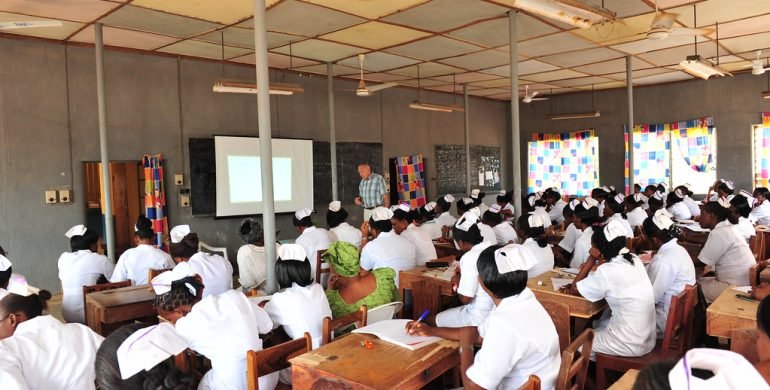
A very large number of the women we work with stopped studying because of a marriage. Some were withdrawn from school for it. Some passed examinations they were never allowed to use. Some were part way through a course when the money was cut off.
Restarting is possible more often than people believe, and it is one of the few decisions that changes the next twenty years rather than the next twelve months.
Being realistic first
Study costs money and time, and both are scarce in the first year. Some honest questions before anything else.
Can you eat while doing it? If not, income comes first and study comes alongside it or after it. A course abandoned in month four because the fees ran out costs more than it gave.
Who has the children? This is the question that decides most of it, and it needs a real answer rather than an optimistic one.
Does it lead somewhere specific? The most common expensive mistake is a general qualification that does not connect to a job anybody is hiring for. Work backwards from the work.
Is it the shortest route? A six-month certificate that gets you employed beats a four-year degree you cannot finish, and it does not prevent the degree later.
The routes
Finishing secondary education. Adult and evening programmes exist, and examinations can be taken privately as an external candidate. For women withdrawn from school at fifteen this is frequently the single highest-value step, because so many things are closed without it.
Vocational and technical training. Tailoring, catering, hairdressing, computer skills, phone repair, tiling, solar installation. Shorter, cheaper, and directly connected to earning. Government technical colleges, private centres and NGO programmes all run these, and quality varies enormously, so ask what past students are actually doing now.
Apprenticeship. Learning under somebody established is the traditional route and it still works. Agree the terms in writing at the start — how long, what it costs, what happens at the end, and whether tools are provided.
Professional certificates. Bookkeeping, computing, health assistance, teaching support. Recognised, relatively short, and they get past the gap on a form.
Higher education. Part-time, distance and open university programmes exist specifically for people working. Slower, and possible.
Restarting something abandoned. Do not assume the previous years are lost. Institutions have processes for readmission and for transferring credit, and asking the question costs one visit.
Documents, which stop people
Almost every route needs certificates, results or a birth certificate, and most women in this position do not have them.
Results can be confirmed by the examination bodies, schools will confirm attendance for former pupils, and attestations exist for births that were never registered. It is slow rather than impossible. The order to do it in matters, because the National Identification Number underpins most of the others.
Start this before you apply anywhere, not after you have been offered a place with a deadline.
Money
Ask about the total rather than the fee. Registration, materials, uniform, examination fees, transport and childcare are what actually break a study plan, and the advertised fee is usually the smallest part.
Where to look: government skills programmes, which are free or heavily subsidised and worth the paperwork; NGO training schemes; employers who fund training for staff, which is one of the more overlooked routes; scholarships for women returning to education; and staged payment, which many private centres will agree to if asked directly.
Education support is part of what we fund. It sits within work and income rather than being separate, because the point of it is employment rather than the certificate.
Doing it with children
The practical arrangements decide this more than motivation does.
- Choose hours that fit school hours where you possibly can. Evening classes sound convenient and are the hardest to sustain.
- Arrange childcare before you start, with a second person agreed for when the first is unavailable. A single arrangement fails within a month.
- Tell the training provider your situation in general terms. Many will accommodate an absence for a court date if they know in advance.
- Involve older children. A twelve-year-old who understands that their mother is studying is usually proud of it rather than resentful.
- Accept that the house will be less well run. This is the trade and it is temporary.
The part that is not practical
Most women in this position expect the difficulty to be the work. It is usually not.
It is sitting in a room with people ten years younger. It is being the oldest person on the course. It is discovering that your handwriting has gone, or that you cannot concentrate for an hour, or that you have forgotten how to be examined. And it is the voice, which will be his, telling you that you are too old, that you will not finish, and that you were never clever.
Two things help. Tell one person on the course that you are returning after a long break, because there is almost always somebody else in the same position and the isolation is worse than the difficulty. And expect the first six weeks to be the worst; concentration comes back with use, and it comes back faster than people expect.
If you cannot start now
Then not now, and it is worth doing one small thing rather than nothing.
Find out what the course actually costs. Get one document replaced. Ask one training centre what their past students are doing. Any of those makes starting later much faster, and they cost a morning rather than a term.
The women who eventually do this are usually the ones who kept it as a live question during a year when it was impossible, rather than closing it.
Questions people ask
I left school at fifteen. Is it too late?
No. Adult and evening programmes exist and examinations can be taken privately as an external candidate. For women withdrawn from school young this is often the single highest-value step, because so much is closed without it.
Should I do a degree or a short course?
Work backwards from the job. A six-month certificate that gets you employed beats a four-year degree you cannot finish, and it does not prevent the degree later.
I have no certificates at all. Can I still apply?
Usually yes, and start the replacements before you apply rather than after. Examination bodies confirm results, schools confirm attendance, and attestations exist for unregistered births.
How do I choose a training centre?
Ask what their past students are actually doing now, and ask for the total cost including registration, materials, examination fees and transport rather than the advertised fee.
What is the hardest part?
Usually not the work. It is being the oldest person in the room and the voice telling you that you were never clever. Concentration comes back with use, faster than people expect, and the first six weeks are the worst.
If you need help now
If you are in immediate danger, call 112. To talk to HealBridge, email us at hello@healbridge.org, or use the form on our contact page. Every page on this site has a Quick Exit button at the top right, and pressing the letter E three times does the same thing.
Before you rely on anything on this page
We publish these articles so that you can understand a subject and work out what to ask for. They are written carefully and in good faith. They are still general information about how things usually work, and not advice about your situation, which we do not know.
- This is not legal advice.
- We are not a law firm. Criminal law in Nigeria is largely a state matter, the VAPP Act applies in a state only if that state adopted it, and statutory, customary and Islamic marriages are governed by different law and different courts. Two people with the same facts can have genuinely different options. Get advice from a lawyer who practises where you live — and if cost is the obstacle, ask us, because arranging that is part of what we do.
- This is not medical advice.
- Nothing here is a diagnosis and nothing here replaces being examined. Do not delay seeing a doctor, nurse or pharmacist because of something you read here, and do not start, stop or change any treatment on the strength of it. If something is time critical, go and be seen.
- This is not counselling, and it is not financial advice.
- Articles about trauma, sleep, money, debt, renting or starting a business describe what commonly helps. They are not therapy and they are not a recommendation about your own money. Speak to a counsellor, a qualified adviser or your own bank about your circumstances.
- It may be out of date, or wrong for where you are.
- Law changes, services close, numbers stop answering and practice varies by state. We correct what we find, and we cannot promise that every page is current on the day you read it. Where we do not have something confirmed, we say so rather than fill the gap.
- Reading this does not make us your lawyer or your doctor.
- No professional relationship is created by reading an article, and we cannot accept liability for decisions taken on the strength of one. What we can do is help you reach somebody who is qualified to advise you, which is what the legal and health parts of our work exist for.
- We cannot promise an outcome, and we cannot make anybody safe.
- A protection order is a piece of paper backed by an enforcement system that is inconsistent. A plan works until the day it does not. Anybody in this field promising safety is selling something, and the promise itself is dangerous because it stops people planning.
Do not let this notice stop you acting. If you are in immediate danger, call 112. If something is medically urgent, go to a hospital — you do not need a police report to be treated. And if you do not know where to start, that is a normal way to begin: use the contact page and we will take it from there.
Also worth reading: