
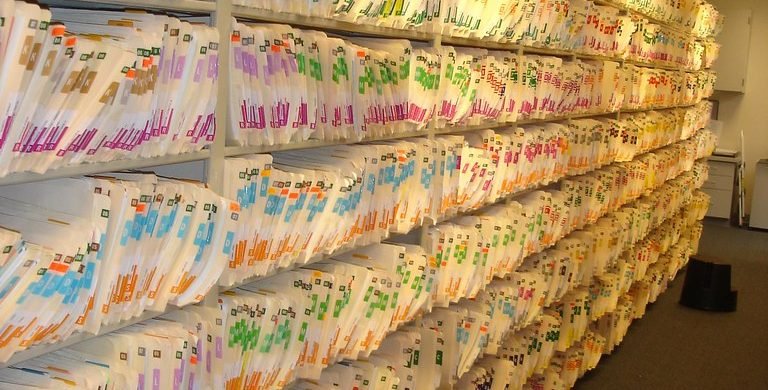
Ask people what stops a woman leaving and they say fear, or money, or the children. Those are all real. But the thing that most often stops the practical machinery from working, weeks later, is paper.
You cannot enrol a child in a school without a birth certificate. You cannot open an account, sign a tenancy or take a job without identification. You cannot claim anything, prove a marriage, prove a contribution to a property, or start a case without documents. And replacing them takes months and money at exactly the moment you have neither.
Copies solve most of this, and copies can be made without anything leaving the house.
What to copy
Identity, yours. National identification and NIN slip, BVN details, voter’s card, driving licence, international passport, birth certificate.
Identity, the children’s. Birth certificates first. Then immunisation cards, school records and results, any passport, and the school’s own registration details.
The marriage. Marriage certificate, church or mosque record, or evidence of a customary marriage such as photographs and a list of who was present. Which kind of marriage you have determines a great deal later, and proving which one it was is sometimes the difficulty.
Money and property. Bank details and statements, land documents, deed of assignment, certificate of occupancy, rent receipts, receipts for anything substantial you paid for, cooperative membership, loan agreements, insurance.
Work and qualification. Certificates, transcripts, professional licences, employment letter, payslips, pension details. These are slow and expensive to replace and are among the first things withheld.
Health. Prescriptions, clinic cards, hospital records, and any medical report about an injury.
Evidence. Photographs of injuries, medical notes, police report numbers, threatening messages. That belongs with the copies rather than on the phone in your pocket.
Where to put them
The rule is that a copy is only useful if it is somewhere he will not look and cannot reach. That rules out the house, including the clever hiding place, because clever hiding places are found during a search of a house he lives in.
- A relative or friend, ideally one he does not associate with you. The obvious person is the first place anybody looks.
- Your workplace. A locker, a drawer, a desk. For many women this is the safest physical location they have.
- Your place of worship. One of the few places a woman can visit regularly without explanation, which makes it unusually useful for this.
- A trusted trader or landlord’s office, where you have a genuine relationship.
- With us. We hold documents for people, including for women who are not planning to go anywhere.
Split them if you can. Two partial sets in two places survives one of them being lost or discovered.
Doing it digitally
Where nothing physical is safe, photograph everything and store it somewhere the phone does not.
The safest arrangement is an email account he does not know exists, opened on a device he does not control, with a password that is not a version of any password you already use and not written anywhere in the house. Send the photographs to it, then delete them from the phone’s gallery, and empty the deleted items folder as well because that is where they sit for another month.
Do not use a cloud account that syncs automatically to a family device. Photographs of your documents appearing on a shared tablet is one of the most common ways this goes wrong, and it goes wrong silently.
Do not name the account or the folder anything meaningful. Do not save the password in the browser. And check whether the phone is backing up your gallery somewhere by default, because most do. What to check on the device covers this properly.
If none of that is safe, a cheap phone kept elsewhere, or an hour on somebody else’s computer, does the same job.
Getting the copies made
Business centres are everywhere and nobody remembers who photographs what. Doing it on the way back from somewhere you normally go is unremarkable.
Photographing with a phone is quicker and leaves no trip to explain. Make sure the whole document is in frame, the numbers are readable, and there is no glare across the important line. Check each one before you put the original back, because discovering an unreadable copy six months later is a specific and avoidable misery.
If the originals are locked away and you cannot get to them, take what you can. A photograph of a certificate number is far better than nothing, and much of the replacement process turns on the number rather than the document.
What to do with the originals
Where you can move originals safely, do, particularly your own identity documents and the children’s birth certificates. Where you cannot, leave them and rely on the copies rather than risk a search.
If you are ever in a position to take originals at short notice, they belong in the bag rather than in a drawer. What goes in the bag puts documents at the top of the list for exactly this reason.
And if you have already left without them, that is recoverable. It is slow rather than impossible, and the order to do it in makes a real difference to how long it takes.
Two things people forget
Photograph the house. Rooms, contents, anything you paid for, and any building work you funded. Property disputes turn on evidence of contribution, and nobody thinks to take these pictures until they need them.
Write down the numbers separately. Account numbers, NIN, BVN, certificate numbers, policy numbers, the school’s registration number, your employer’s staff number. One list, kept with somebody you trust. It fits on one page and it is what you will actually be asked for on the phone.
If you want help with any of it
Holding documents for people is one of the plainest things we do, and it is one of the most requested. Nobody is asked why, nothing is opened, and you can collect them or ask us to destroy them at any time without giving a reason.
Questions people ask
Is a photograph as good as the original?
For most practical purposes at the start, yes. It gets you through the first conversations and gives you the numbers, which is what replacement usually turns on. Some processes will eventually want an original or a certified copy.
Where is the safest place to keep them?
Somewhere outside the house that he does not associate with you. A workplace locker, a place of worship, a less obvious relative, or with us. Splitting them between two places is better than one.
Is emailing them to myself safe?
Only to an account he does not know exists, with a password that is not a version of one you already use, and only if you then delete the images from the phone including the deleted items folder. Automatic backup to a shared family device is the usual way this goes wrong.
Should I take the originals?
Where you can do it safely, yes, especially your identity documents and the children’s birth certificates. Where a search would follow, leave them and rely on the copies.
I already left without anything. Is it hopeless?
No, it is slow rather than impossible, and doing the replacements in the right order shortens it considerably. We can help with the fees and with the going back and forth.
If you need help now
If you are in immediate danger, call 112. To talk to HealBridge, email us at hello@healbridge.org, or use the form on our contact page. Every page on this site has a Quick Exit button at the top right, and pressing the letter E three times does the same thing.
Before you rely on anything on this page
We publish these articles so that you can understand a subject and work out what to ask for. They are written carefully and in good faith. They are still general information about how things usually work, and not advice about your situation, which we do not know.
- This is not legal advice.
- We are not a law firm. Criminal law in Nigeria is largely a state matter, the VAPP Act applies in a state only if that state adopted it, and statutory, customary and Islamic marriages are governed by different law and different courts. Two people with the same facts can have genuinely different options. Get advice from a lawyer who practises where you live — and if cost is the obstacle, ask us, because arranging that is part of what we do.
- This is not medical advice.
- Nothing here is a diagnosis and nothing here replaces being examined. Do not delay seeing a doctor, nurse or pharmacist because of something you read here, and do not start, stop or change any treatment on the strength of it. If something is time critical, go and be seen.
- This is not counselling, and it is not financial advice.
- Articles about trauma, sleep, money, debt, renting or starting a business describe what commonly helps. They are not therapy and they are not a recommendation about your own money. Speak to a counsellor, a qualified adviser or your own bank about your circumstances.
- It may be out of date, or wrong for where you are.
- Law changes, services close, numbers stop answering and practice varies by state. We correct what we find, and we cannot promise that every page is current on the day you read it. Where we do not have something confirmed, we say so rather than fill the gap.
- Reading this does not make us your lawyer or your doctor.
- No professional relationship is created by reading an article, and we cannot accept liability for decisions taken on the strength of one. What we can do is help you reach somebody who is qualified to advise you, which is what the legal and health parts of our work exist for.
- We cannot promise an outcome, and we cannot make anybody safe.
- A protection order is a piece of paper backed by an enforcement system that is inconsistent. A plan works until the day it does not. Anybody in this field promising safety is selling something, and the promise itself is dangerous because it stops people planning.
Do not let this notice stop you acting. If you are in immediate danger, call 112. If something is medically urgent, go to a hospital — you do not need a police report to be treated. And if you do not know where to start, that is a normal way to begin: use the contact page and we will take it from there.
Also worth reading: