
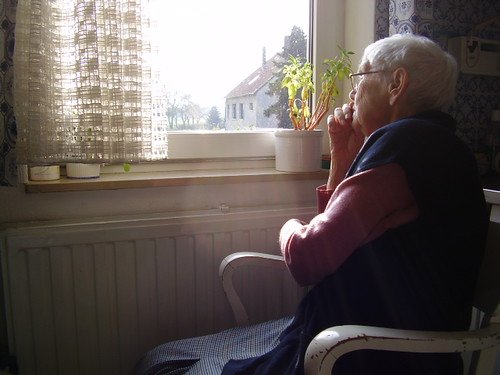
Almost every domestic abuse service is designed around a woman in her thirties with young children. Women in their sixties and seventies experience abuse too, and they are among the least likely people in Nigeria to tell anybody about it.
Why it goes unreported
- Decades of it having been normal, and no language ever offered for it.
- The belief that it is far too late for anything to change, so there is no point in saying it aloud.
- Financial dependence built over a lifetime, including a pension or land in his name.
- Grandchildren, and a well founded fear of losing contact with them.
- Health and mobility, where the person harming her is also the person who helps her.
- Shame in front of adult children who have their own relationship with their father and their own view of him.
- A generation of professionals who do not think to ask a woman of seventy the question at all.
That last one is worth naming. Many older women have attended clinics for years with symptoms that would have prompted the question if they were thirty.
Abuse from an adult child
This is common and very rarely discussed. A grown son or daughter living at home who takes money, controls the pension, threatens, damages property, or withholds care and medication.
Mothers protect their children, including adult ones who are harming them, and will minimise it for years and to everybody. Many describe it in terms of his temper, or the fact that he has had a difficult time, or that there is nowhere else for him to go.
It is abuse, and it can be acted on. Financial abuse of an older person is recognised in Nigerian law as it is elsewhere, and the mechanism is the same as it is in a marriage. So is the effect, which is that the money is not available for the person it belongs to.
Where care and control overlap
If the person who hurts you is also the person who cooks, collects your medicine and takes you to the clinic, leaving is not merely frightening. It is a practical impossibility unless the care is replaced first.
That is a problem with a solution rather than a reason to accept what is happening. What it does mean is that the plan has to begin with the care rather than with the exit, and that anybody advising you needs to know the practical detail before suggesting anything.
When you contact us, say what you need help with day to day. That single piece of information changes the order in which everything else can happen.
What can still be done
- Protection orders are not limited by age and can require somebody to leave a property, including an adult child. The process is here.
- Pension and bank arrangements can be changed, and misuse of your money by a relative can be challenged. An account only you can see is as useful at seventy as at thirty.
- Medical appointments are an opportunity to speak alone. Ask to be seen without whoever brought you. Any clinician will find a reason.
- Contact with grandchildren is a separate matter from your safety and should not be used to keep you silent. If it is being used that way, say so out loud to somebody, because that is itself a form of control.
If you are the adult child of a woman in this position
Ask her once, alone, plainly. Not in front of your father and not in front of your siblings. Do not press her for a decision, and do not tell the rest of the family without her agreement, because in a large family that information travels back within a day.
Practical help is worth more than persuasion. Hold her documents. Be the address for a letter. Take her to one appointment where you can wait outside so that she can speak to somebody alone.
It is not too late
Women have left after forty years of marriage and have described the years afterwards as the best of their lives. Others have stayed and used an order to make staying safe.
Whether you leave or not, the practical things are worth doing. An account of your own. One person who knows. A written record of what happens and when. None of those require a decision about your marriage, and all of them widen what is possible later.
Questions people ask
Is it abuse if it is my son doing it?
Yes. Taking money, threatening, and withholding care or medication are abuse regardless of the relationship, and the law does not stop applying because the person is your child.
I am dependent on him for care. What can I do?
The plan has to start with replacing the care rather than with leaving. Tell us the practical detail when you contact us, because that determines the order things can happen in.
I am too old to start again. Is there any point?
Women have left after forty years and described what followed as the best time of their lives. The practical steps are also worth taking if you stay.
Will my children have to be told?
Not by us. We do not contact family without your agreement.
If you need help now
If you are in immediate danger, call 112. To talk to HealBridge, email us at hello@healbridge.org, or use the form on our contact page. Every page on this site has a Quick Exit button at the top right, and pressing the letter E three times does the same thing.
Before you rely on anything on this page
We publish these articles so that you can understand a subject and work out what to ask for. They are written carefully and in good faith. They are still general information about how things usually work, and not advice about your situation, which we do not know.
- This is not legal advice.
- We are not a law firm. Criminal law in Nigeria is largely a state matter, the VAPP Act applies in a state only if that state adopted it, and statutory, customary and Islamic marriages are governed by different law and different courts. Two people with the same facts can have genuinely different options. Get advice from a lawyer who practises where you live — and if cost is the obstacle, ask us, because arranging that is part of what we do.
- This is not medical advice.
- Nothing here is a diagnosis and nothing here replaces being examined. Do not delay seeing a doctor, nurse or pharmacist because of something you read here, and do not start, stop or change any treatment on the strength of it. If something is time critical, go and be seen.
- This is not counselling, and it is not financial advice.
- Articles about trauma, sleep, money, debt, renting or starting a business describe what commonly helps. They are not therapy and they are not a recommendation about your own money. Speak to a counsellor, a qualified adviser or your own bank about your circumstances.
- It may be out of date, or wrong for where you are.
- Law changes, services close, numbers stop answering and practice varies by state. We correct what we find, and we cannot promise that every page is current on the day you read it. Where we do not have something confirmed, we say so rather than fill the gap.
- Reading this does not make us your lawyer or your doctor.
- No professional relationship is created by reading an article, and we cannot accept liability for decisions taken on the strength of one. What we can do is help you reach somebody who is qualified to advise you, which is what the legal and health parts of our work exist for.
- We cannot promise an outcome, and we cannot make anybody safe.
- A protection order is a piece of paper backed by an enforcement system that is inconsistent. A plan works until the day it does not. Anybody in this field promising safety is selling something, and the promise itself is dangerous because it stops people planning.
Do not let this notice stop you acting. If you are in immediate danger, call 112. If something is medically urgent, go to a hospital — you do not need a police report to be treated. And if you do not know where to start, that is a normal way to begin: use the contact page and we will take it from there.
Also worth reading: