
The most disorienting thing about the first months is not the practical difficulty. It is that the symptoms frequently get worse once you are safe, which nobody warns anybody about.
Women describe it the same way: I coped for years, and now that it is over I cannot sleep, I cry at nothing, I jump at doors, I am angry all the time. And underneath that, the conclusion that they are falling apart at the exact moment they should be relieved.
That is not what is happening.
Why it gets worse when the danger stops
While the danger is present, the body does what it has to. It stays alert, it manages, it postpones. There is no safe moment to fall apart in and so you do not.
Once there is a safe moment, the postponed thing arrives. That is why it surfaces in the second week in a quiet room rather than during the years when it was actually happening. It is a sign that your body has registered that it is over, not a sign that you were wrong to leave.
What trauma does physically covers the wider picture. This page is about sleep specifically, because that is what people ask about most and it is the one that makes everything else harder.
What is normal in the first months
- Lying awake for hours, or falling asleep and waking at three.
- Waking at the time incidents used to happen.
- Nightmares, often repetitive, sometimes not about him at all.
- Waking with your heart racing and no memory of a dream.
- Jumping at a door, a raised voice, a motorbike, or footsteps in a corridor.
- Sleeping in your clothes, or with a light on, or near the door.
- Checking the locks repeatedly, knowing you have already checked them.
- Exhaustion that sleep does not fix.
- Feeling nothing at all, which frightens people more than crying does.
All of it is common. Most of it eases over months rather than weeks, and it eases faster with a routine and slower in isolation.
What actually helps
None of this is dramatic. It works because it is repeated.
A fixed waking time. More important than a fixed bedtime and much easier to control. Get up at the same hour regardless of how the night went, and the nights follow within a couple of weeks.
Get out into daylight early. Twenty minutes of morning light does more for a broken sleep pattern than anything you can take.
Do not lie there. If you are awake for more than about twenty minutes, get up, sit somewhere with a low light, do something dull, and go back when you are sleepy. Lying in bed awake teaches the body that bed is where you lie awake.
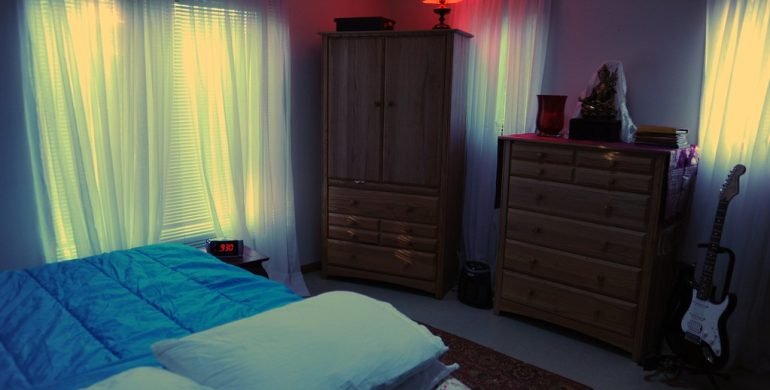
Make the room feel defensible. This one is specific to your situation and it matters more than the general advice. A lock that works, something against the door, a light you can reach, a phone charged and within reach, curtains that close properly. The body will not stand down in a room it does not believe is secure, and no relaxation technique overrides that.
Deal with the caffeine. Nothing after midday if you are struggling.
Careful with alcohol. It gets people to sleep and wakes them at three, and it is an easy habit to acquire in this period.
Move during the day. Walking is enough. A body that has done nothing does not sleep.
Write the list before bed. Most three-in-the-morning waking is administrative. Everything you are worrying about, on paper, before you lie down.
Nightmares
They usually reduce on their own over months. A few things help in the meantime.
Get fully awake after one rather than trying to slide straight back — sit up, put a light on, have some water, be in the room for a few minutes. Going straight back in often continues it.
Where the same dream repeats, some people find it helps to write it out during the day and deliberately imagine a different ending, rehearsing that version. It sounds too simple to work and there is a reasonable basis for it.
And accept that dreams are frequently not about him at all. Being chased, losing a child, teeth falling out, a house flooding. The subject does not have to match for the cause to be obvious.
The children
Expect disturbed sleep from them too, and expect it to look like something else: bedwetting after years of dryness, refusing to sleep alone, coming into your bed, waking screaming, or a sudden fear of the dark in a child who was fine.
What helps is routine, more than reassurance. The same order of things every night, at the same time, even when everything else has changed. A light on if they want one. Letting them sleep near you for a while, which will not create a permanent habit whatever anybody says.
If a child is not sleeping after several months, or is frightened during the day as well, that is worth raising with somebody. Children generally respond to help faster than adults do, which is one of the few genuinely hopeful facts in this subject. What to say to them is set out separately.
When to get proper help
Not because you have failed at the list above. Because some of this responds much better to treatment than to endurance.
- Still barely sleeping after two or three months.
- Flashbacks where you are back in it rather than remembering it.
- Unable to work, care for the children, or leave the house.
- Drinking or taking something to sleep most nights.
- Thoughts of harming yourself. Please tell somebody today, and it does not have to be a professional.
- A child who is not improving after several months.
Counselling for women and separately for children is one of our six programmes and you do not have to be in crisis to ask for it. Be cautious about anybody prescribing sleeping tablets for months rather than weeks; they have a place at the start and they are not a treatment for this.
The thing worth knowing
Almost everybody in your position believes, at about week three, that they are getting worse rather than better and that something is wrong with them specifically.
What is actually happening is that a body which was not allowed to react is finally reacting, in a place where it is safe enough to do so. It is unpleasant, it is not permanent, and it is not a verdict on the decision you made.
Questions people ask
Why am I worse now that I am safe?
Because a body under threat postpones the reaction until there is a safe moment to have it. It surfacing now is a sign that your body has registered the danger is over, not that you were wrong to leave.
Is it normal to sleep in my clothes or with the light on?
Very. So is sleeping near the door and checking locks you know you have already checked. It eases as the room starts to feel defensible, which is why the physical security of the room matters more than any relaxation technique.
What is the single most useful change?
A fixed waking time, held regardless of how the night went, plus twenty minutes of morning daylight. The nights follow the mornings within a couple of weeks.
My child has started wetting the bed again. Should I worry?
It is a very common response and it usually settles with routine rather than with reassurance. If it continues for several months, or there is fear during the day too, raise it with somebody — children respond to help faster than adults.
Should I take something to sleep?
They have a place for a short period at the start. Be cautious about anybody prescribing them for months, and be careful with alcohol, which gets people to sleep and wakes them at three.
If you need help now
If you are in immediate danger, call 112. To talk to HealBridge, email us at hello@healbridge.org, or use the form on our contact page. Every page on this site has a Quick Exit button at the top right, and pressing the letter E three times does the same thing.
Before you rely on anything on this page
We publish these articles so that you can understand a subject and work out what to ask for. They are written carefully and in good faith. They are still general information about how things usually work, and not advice about your situation, which we do not know.
- This is not legal advice.
- We are not a law firm. Criminal law in Nigeria is largely a state matter, the VAPP Act applies in a state only if that state adopted it, and statutory, customary and Islamic marriages are governed by different law and different courts. Two people with the same facts can have genuinely different options. Get advice from a lawyer who practises where you live — and if cost is the obstacle, ask us, because arranging that is part of what we do.
- This is not medical advice.
- Nothing here is a diagnosis and nothing here replaces being examined. Do not delay seeing a doctor, nurse or pharmacist because of something you read here, and do not start, stop or change any treatment on the strength of it. If something is time critical, go and be seen.
- This is not counselling, and it is not financial advice.
- Articles about trauma, sleep, money, debt, renting or starting a business describe what commonly helps. They are not therapy and they are not a recommendation about your own money. Speak to a counsellor, a qualified adviser or your own bank about your circumstances.
- It may be out of date, or wrong for where you are.
- Law changes, services close, numbers stop answering and practice varies by state. We correct what we find, and we cannot promise that every page is current on the day you read it. Where we do not have something confirmed, we say so rather than fill the gap.
- Reading this does not make us your lawyer or your doctor.
- No professional relationship is created by reading an article, and we cannot accept liability for decisions taken on the strength of one. What we can do is help you reach somebody who is qualified to advise you, which is what the legal and health parts of our work exist for.
- We cannot promise an outcome, and we cannot make anybody safe.
- A protection order is a piece of paper backed by an enforcement system that is inconsistent. A plan works until the day it does not. Anybody in this field promising safety is selling something, and the promise itself is dangerous because it stops people planning.
Do not let this notice stop you acting. If you are in immediate danger, call 112. If something is medically urgent, go to a hospital — you do not need a police report to be treated. And if you do not know where to start, that is a normal way to begin: use the contact page and we will take it from there.
Also worth reading: