
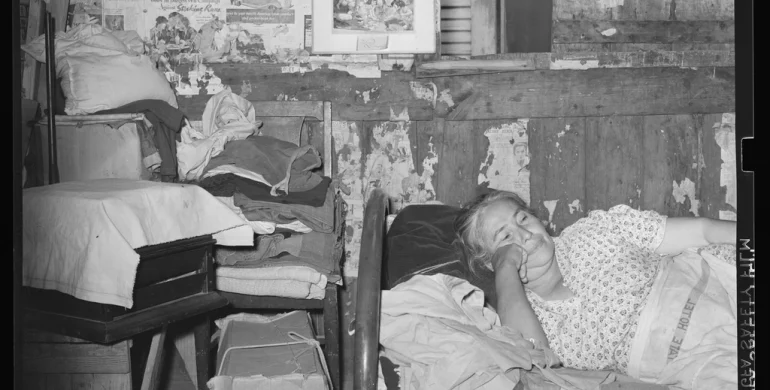
A great many women describe the same surprise. They coped for years, left, reached somewhere safe, and then fell apart.
That is not a relapse and it is not weakness. While you are in danger the body holds itself together because it has to. When the danger stops, it puts the weight down, and putting it down hurts. Knowing that in advance stops it frightening you, and stops you concluding that you were better off before.
What is common
- Sleeping badly, or sleeping for a fortnight.
- Being startled by ordinary sounds. A door, a raised voice, a motorcycle, a set of keys.
- Reliving moments without warning, sometimes triggered by a smell, a song or a time of day.
- Difficulty concentrating, and difficulty making very small decisions.
- Numbness, or a sense of watching your own life from a distance.
- Physical pain with no medical cause. Headaches, stomach problems, jaw and neck pain from months of clenching.
- Anger arriving late, often months later, and frequently aimed at the wrong people.
- Guilt, and missing him, which many women find shameful and which is extremely common.
That last one deserves a sentence of its own. Missing somebody who hurt you is not evidence that you were wrong to leave. It is evidence that the relationship was not bad every minute, which almost none of them are.
Why small decisions are hard
If every choice for years carried a risk assessment, the ordinary machinery of deciding gets worn out. Women describe standing in a shop unable to choose between two brands of rice.
It returns with use, and it returns faster than most people expect once nothing depends on the answer. In the meantime, decide small things quickly and badly rather than slowly and well. It is practice.
What helps
- Routine. Sleep, food and daylight at roughly the same times each day. It is dull, and early on it does more than anything else on this list.
- Movement. Walking counts. Trauma sits in the body as much as the mind and movement helps discharge it.
- Telling it to somebody trained. Trauma informed counselling is not advice and it is not being told to move on. It works, and it works faster for children than for adults.
- Care with alcohol and sedatives. Both make sleep worse over time and both are easy to reach for at three in the morning.
- Expecting anniversaries. Dates carry weight even when you have consciously forgotten why a particular week feels heavy.
What the gaslighting leaves behind
If you were told for years that your memory was wrong, the doubt does not stop the day you leave. Women describe still checking their own account of events, still qualifying every sentence, still expecting to be contradicted.
Writing things down helps here as much as it did before, but for a different reason. Not as evidence, as a record you can trust. What gaslighting does and the wider pattern are covered separately, and recognising the mechanism is often the point at which the doubt starts to lift.
When to get help quickly
See somebody without waiting if you are thinking about ending your life, if you cannot function day to day after several weeks, if you are drinking or using something to get through the evenings, or if you cannot care for your children.
None of those mean you are failing. They mean the load needs sharing and that waiting will not improve it.
Your children
They are going through their own version of this and it looks different. Bed wetting, clinging, anger at you rather than at him, stomach aches with no cause, or a flat calm that looks like coping and is not. What to say and what to watch for is set out separately.
How long
Longer than you want and less than forever.
Most women describe the first six months as the hardest, real improvement across the first year, and something like themselves returning in the second. It is not a straight line. A bad month after a good one is not a return to the beginning, and it is the point at which people most often conclude that nothing is working.
Going back to work is part of this rather than something to be attempted once you are better. That article covers the confidence problem, which is usually larger than the practical one.
Questions people ask
Why do I miss him?
Because you loved him and because the relationship was not bad every minute. Missing somebody who hurt you is one of the most commonly reported feelings and it is not a sign that leaving was wrong.
Is counselling really necessary?
Not for everyone, and many people benefit substantially. If sleep, concentration or flashbacks are affecting daily life after several weeks, it is worth arranging.
I feel worse now than when I was with him. Is that normal?
Yes, and it is one of the commonest things women tell us. The body holds itself together while the danger is present and lets go afterwards.
How long before I feel like myself?
Most women describe real improvement across the first year and something like themselves in the second. It is not a straight line.
If you need help now
If you are in immediate danger, call 112. To talk to HealBridge, email us at hello@healbridge.org, or use the form on our contact page. Every page on this site has a Quick Exit button at the top right, and pressing the letter E three times does the same thing.
Before you rely on anything on this page
We publish these articles so that you can understand a subject and work out what to ask for. They are written carefully and in good faith. They are still general information about how things usually work, and not advice about your situation, which we do not know.
- This is not legal advice.
- We are not a law firm. Criminal law in Nigeria is largely a state matter, the VAPP Act applies in a state only if that state adopted it, and statutory, customary and Islamic marriages are governed by different law and different courts. Two people with the same facts can have genuinely different options. Get advice from a lawyer who practises where you live — and if cost is the obstacle, ask us, because arranging that is part of what we do.
- This is not medical advice.
- Nothing here is a diagnosis and nothing here replaces being examined. Do not delay seeing a doctor, nurse or pharmacist because of something you read here, and do not start, stop or change any treatment on the strength of it. If something is time critical, go and be seen.
- This is not counselling, and it is not financial advice.
- Articles about trauma, sleep, money, debt, renting or starting a business describe what commonly helps. They are not therapy and they are not a recommendation about your own money. Speak to a counsellor, a qualified adviser or your own bank about your circumstances.
- It may be out of date, or wrong for where you are.
- Law changes, services close, numbers stop answering and practice varies by state. We correct what we find, and we cannot promise that every page is current on the day you read it. Where we do not have something confirmed, we say so rather than fill the gap.
- Reading this does not make us your lawyer or your doctor.
- No professional relationship is created by reading an article, and we cannot accept liability for decisions taken on the strength of one. What we can do is help you reach somebody who is qualified to advise you, which is what the legal and health parts of our work exist for.
- We cannot promise an outcome, and we cannot make anybody safe.
- A protection order is a piece of paper backed by an enforcement system that is inconsistent. A plan works until the day it does not. Anybody in this field promising safety is selling something, and the promise itself is dangerous because it stops people planning.
Do not let this notice stop you acting. If you are in immediate danger, call 112. If something is medically urgent, go to a hospital — you do not need a police report to be treated. And if you do not know where to start, that is a normal way to begin: use the contact page and we will take it from there.
Also worth reading: