
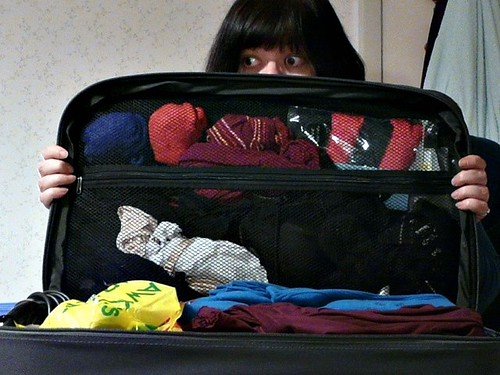
An emergency bag is the difference between leaving with your life and leaving with your life plus the ability to prove who you are. Women who leave without documents spend months rebuilding an identity while also trying to stay safe, find work and keep children in school.
This is part of a wider safety plan, and it is the part that is worth doing first because it can be done slowly and invisibly.
Where to keep it
Not in the house. With somebody you trust, somewhere you can reach at short notice and he cannot.
A neighbour. A relative he does not visit. A locker at work. A church or a mosque, both of which are used for this far more often than people realise and where nobody will ask you what is in it.
Use a bag that looks like an ordinary bag. Not a suitcase, not something new, nothing that would prompt a question if it were seen in the boot of a car.
Documents first
These matter more than clothes and they are the hardest to replace.
- Birth certificates, yours and every child’s
- Marriage certificate
- National identity slip, voter card, driving licence, passport
- School records, report cards, immunisation cards
- Bank cards, account details, any savings book
- Tenancy agreement, land or property documents
- Medical records and current prescriptions
- Any protection order, police extract or hospital note
Move them one at a time over weeks, so that nothing is ever missing on a particular day. Where you cannot take an original safely, photograph it and email the photograph to an account he does not know about. A photograph is not as good as an original and it is enormously better than nothing.
That email account is worth setting up before anything else. Create it on a device he does not control, and do not sign into it on your ordinary phone. Keeping your phone and your messages private explains why that last point matters.
Money
Cash in small notes, kept separately from your everyday purse so that it is not spent by accident. Enough for transport, one night somewhere and food.
A card for an account only you can see, if you have one. If you do not, start there, because cash in a bag can be found and an account cannot.
Phone and keys
A charger and a power bank. A phone with no charger is a phone for one day.
Write three telephone numbers on paper and put the paper in the bag. Almost nobody can recite a number from memory any more, and a broken or confiscated phone otherwise takes your entire contact list with it.
Spare keys to the house and, if you have one, the car.
For the children
One comfort object each. This is not sentimentality. A familiar toy makes a strange room survivable for a small child, and a child who sleeps is a mother who can think the following morning.
Medicines, inhalers, anything with a dose. A change of clothes each. Something to do, because waiting is most of what the first day consists of.
Safety planning when you have children covers what to tell them and when.
For you
A change of clothes and underwear. Any medication you take, with the dose written down. Sanitary items. Spare glasses or lenses. Something warm, because arriving somewhere at night is colder than people expect.
The four things women most often forget
- School records. Getting a child into a new school without them is slow, and slow means weeks out of education at the worst possible moment.
- Medication doses. The name of the tablet is easy to remember. The dose is not, and a pharmacist cannot help without it.
- Photographs. Family pictures cannot be replaced and are very commonly destroyed after a woman leaves. Photograph the photographs if you cannot take them.
- Chargers. See above. It is the single most common omission.
Keeping it current
Check it every few months. Children outgrow clothes, prescriptions change, cards expire, and a bag packed two years ago may contain a passport that has run out.
If you cannot get anything out at all
Then take nothing and go. Every document on this list can be replaced and we help women do exactly that, routinely. Nothing in a bag is worth an injury or a delay.
If you are at the point of deciding when to leave, Planning to leave safely deals with the day itself, and Finding somewhere safe to stay deals with where to go.
Questions people ask
What if I cannot get anything out of the house?
Take nothing and go. Documents can be replaced and we help with that routinely. Nothing on the list is worth an injury.
How much money should be in it?
Enough for transport, one night and food for you and the children. Build it slowly rather than in one visible amount.
He looks through my things. Where can I keep it?
Outside the house entirely. A neighbour, a relative he does not visit, a locker at work, or a place of worship.
Should I pack clothes for him to not notice missing?
Take old clothes rather than favourites, for exactly that reason. Missing favourites are noticed.
If you need help now
If you are in immediate danger, call 112. To talk to HealBridge, email us at hello@healbridge.org, or use the form on our contact page. Every page on this site has a Quick Exit button at the top right, and pressing the letter E three times does the same thing.
Before you rely on anything on this page
We publish these articles so that you can understand a subject and work out what to ask for. They are written carefully and in good faith. They are still general information about how things usually work, and not advice about your situation, which we do not know.
- This is not legal advice.
- We are not a law firm. Criminal law in Nigeria is largely a state matter, the VAPP Act applies in a state only if that state adopted it, and statutory, customary and Islamic marriages are governed by different law and different courts. Two people with the same facts can have genuinely different options. Get advice from a lawyer who practises where you live — and if cost is the obstacle, ask us, because arranging that is part of what we do.
- This is not medical advice.
- Nothing here is a diagnosis and nothing here replaces being examined. Do not delay seeing a doctor, nurse or pharmacist because of something you read here, and do not start, stop or change any treatment on the strength of it. If something is time critical, go and be seen.
- This is not counselling, and it is not financial advice.
- Articles about trauma, sleep, money, debt, renting or starting a business describe what commonly helps. They are not therapy and they are not a recommendation about your own money. Speak to a counsellor, a qualified adviser or your own bank about your circumstances.
- It may be out of date, or wrong for where you are.
- Law changes, services close, numbers stop answering and practice varies by state. We correct what we find, and we cannot promise that every page is current on the day you read it. Where we do not have something confirmed, we say so rather than fill the gap.
- Reading this does not make us your lawyer or your doctor.
- No professional relationship is created by reading an article, and we cannot accept liability for decisions taken on the strength of one. What we can do is help you reach somebody who is qualified to advise you, which is what the legal and health parts of our work exist for.
- We cannot promise an outcome, and we cannot make anybody safe.
- A protection order is a piece of paper backed by an enforcement system that is inconsistent. A plan works until the day it does not. Anybody in this field promising safety is selling something, and the promise itself is dangerous because it stops people planning.
Do not let this notice stop you acting. If you are in immediate danger, call 112. If something is medically urgent, go to a hospital — you do not need a police report to be treated. And if you do not know where to start, that is a normal way to begin: use the contact page and we will take it from there.
Also worth reading: